
First Round of Seeds Planted in our Vegetable Garden
I'm so excited to report that yesterday we planted our first round of vegetable seeds in our Square Foot Garden. We have four SFG boxes full of soil, with nearly 10 more to fill...but this was a great start and we are so excited to actually have seeds in the ground.
We planted a wide array of veggies that we eat often here in the Caddel household and I am now ready to lovingly attend to the cute little symmetrical squares to be sure that they are happy, sunny, and well-watered as we move forward to the sprouting stage.
We used this great soil recipe called "Mel's Mix," which comes highly recommended from those in the SFG circle. It includes:
- 1/3 vermiculite
- 1/3 peat moss
- 1/3 compost (from as many sources as possible)
If you are interested in learning more about the Square Foot Gardening method, I highly recommend reading this book. It's very easy to follow and a really great way to grow your own food. We have built 14 of the SFG boxes and utilized almost all of our backyard to accomodate them.
We figured that if we are going to do this, we might as well go big and move forward down the road to self-sufficient gardening. You can also see a glimpse of our composter back in the right-hand corner of the yard. We are really enjoying using it too - it's such a great tool for a home garden. The whole planning, building, and planting of the boxes been a great learning experience and lots of fun so far!
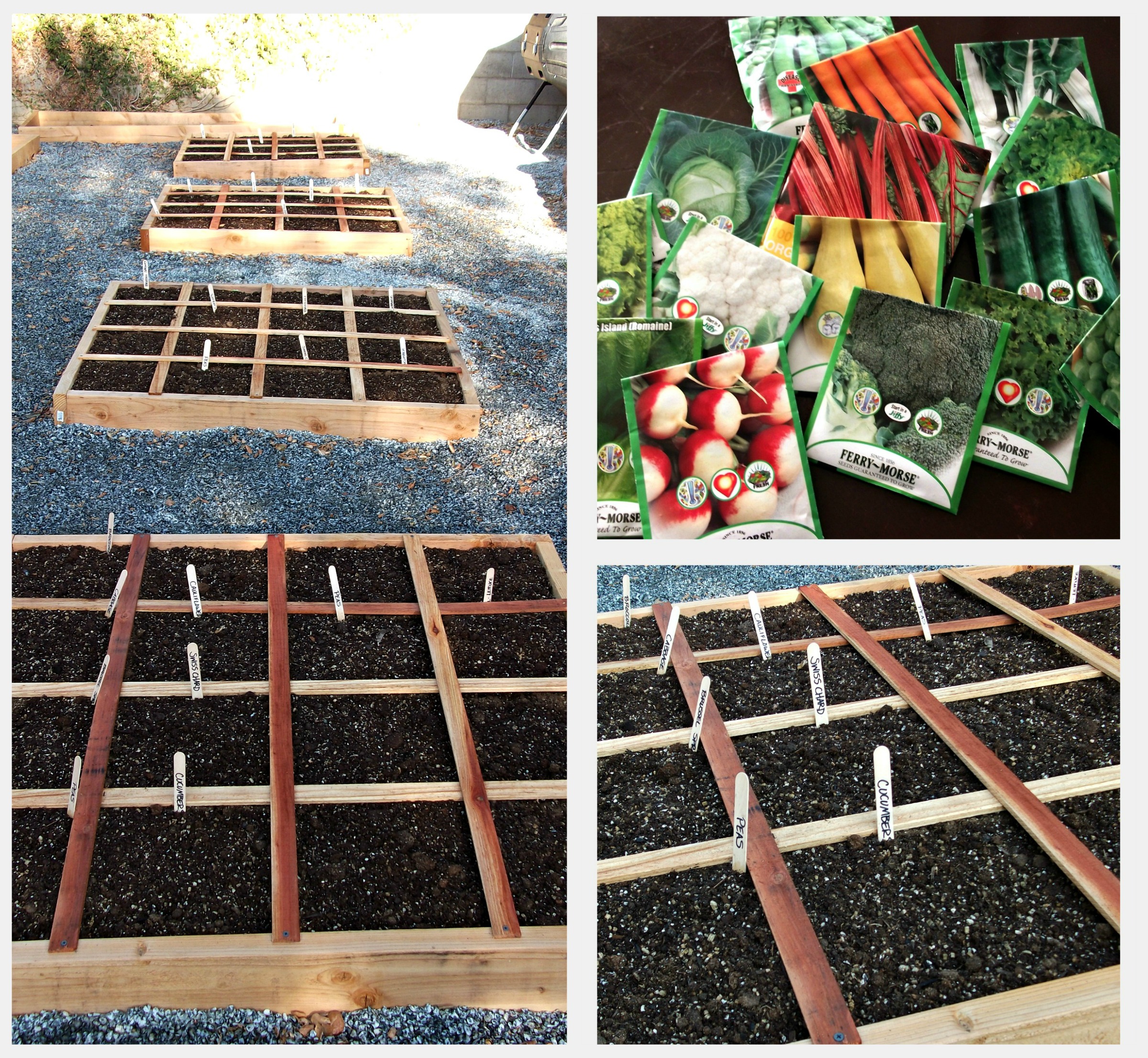 Seeds planted in the first four of our Square Foot Garden boxes (click to view larger)
I will keep you updated as to the progress of our seeds; as well as when we move forward with filling the next round of boxes with soil and planting round two.
Fingers crossed for some pretty little sprouts popping up soon.
And I will leave you with this beautiful little quote from May Sarton, which says:
"Everything that slows us down and forces patience, everything that sets us back into the slow circles of nature, is a help. Gardening is an instrument of grace. "

 Tuesday, March 20, 2012 at 9:42AM